
Checkout using your account
Checkout as a new customer
Creating an account has many benefits:
Reviewed By
Tyre Specialist, Tire.ae
Mohammad Mahmoudi is the Operations Manager at Tire.ae, helping customers choose the right tyres for their vehicles. He ensures professional fitting services and a reliable experience across the UAE.
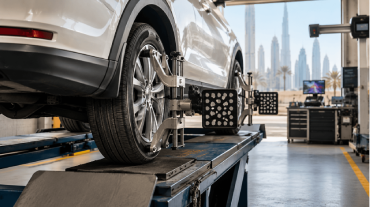
Proper wheel alignment is essential for maintaining safe handling, even tyre wear, and optimal fuel efficiency. Having a wheel alignment done could be in order if your car jerks in one direction, your steering wheel does not feel centered, or your tires are not wearing evenly. In the UAE, on roads where cars travel at highway speeds and temperatures are high, proper wheel alignment is a significant aspect of regular Car Service.
Wheel alignment is the adjustment of a vehicle's wheel joint angles to meet the manufacturer's specifications. It is not the same as wheel balancing, which is a procedure to balance the weight of the assembly of the wheel and the tyre. Correct alignment, ensuring all four wheels track properly, enhances the vehicle's stability, tire life, and driving comfort.
The tyre manufacturers (Michelin and Goodyear) recommend car tyres wheel checking when abnormal tyre wear is diagnosed, when the vehicle starts steering right or left, or when there is repair or replacement of the suspension and steering. This will help keep the vehicle safe and ensure the tires perform at their best.
Wheel alignment is the process of adjusting the vehicle's suspension geometry so that the wheels sit at the manufacturer-specified angles relative to the road surface and each other. It is not the wheels themselves that are physically aligned, as most drivers may think. Rather, technicians constantly adjust the suspension components that regulate the wheels' contact with the road.
Tyres that are well aligned will be in the best position to contact the road, will have a more precise steering response, will have less unwarranted tire wear, and will have improved fuel efficiency. Given that tyres are the largest recurring vehicle cost, proper alignment also helps reduce long-term ownership costs.
Modern wheel alignment primarily involves three alignment angles that influence vehicle handling and tyre wear.
"Camber” is the inward or outward tilt of the wheel when viewed from the front or rear of the vehicle. Too much positive or negative camber can cause uneven tire wear and reduced contact with the road, which reduces stability when braking and cornering.
"Toe" refers to the edges of the front tyres sloping inward or outward when viewed from above. One of the most frequent causes of fast tyre wear is wrongly set toe since the tyres grate on the road rather than smoothing over it.
“Caster” is the forward or backward angle of the steering axis when viewed from the side of the vehicle. Proper caster improves straight-line stability and helps the steering wheel naturally return to center after a turn. Proper caster aids the steering wheel in returning to the center after a maneuver and improves stability in straight-line driving, especially over long distances and on highways.
Most cars display warning codes before the alignment becomes a serious issue. Early identification of these symptoms can enable drivers to book a wheel alignment service before uneven tyre wear or suspension damage can occur.
When your vehicle is always pulling to the right or to the left when you are on a straight road, even after putting the correct pressure on your tyres, then there might be something wrong with the alignment of your wheels. Driving constantly requires steering correction, which can be a sign of suspension problems.
Once the steering wheel is turned, it must re-center by default. When it is steering straight with the steering wheel at an angle, then it should be professionally reviewed.
Uneven tread wear is one of the greatest indicators of poor alignment. Wearing on the inside or outside of the edge of the tyre frequently indicates wrong settings of camber or toe.
A misaligned car can be less responsive when steering, or it may undulate at very high speeds. Even though a number of mechanical problems are known to cause a similar effect, wheel alignment should always be checked when diagnosing.
Whenever tyres approach each other due to improper toe positioning, they might sometimes be scraping against the road and cause squealing noises, even during normal driving conditions. This unproductive friction also increases wear.
Many drivers believe wheel alignment only changes after a major accident. In reality, everyday driving conditions can gradually alter suspension geometry over time. Suspension geometry can gradually change as rubber bushings compress, ball joints wear, or repeated road impacts slightly alter suspension component positions. Even minor geometry changes can affect tyre wear over thousands of kilometres.
The majority of manufacturers suggest that the wheel alignment should be checked after every 10,000-15,000 km or when changing new tyres, suspension components, or steering parts. When you drive over speed humps, kerbs and rough roads regularly, it is advisable to have your wheel alignment done during your frequent Car Service to avoid the unexpected case of tyre wear and loss of control.
The average price of wheel alignment service in the UAE is AED 80-150 for sedans, whereas four-wheel-drive vehicles, SUVs, and luxury cars are between AED 150-300, depending on the type of vehicle and whether it is two- or four-wheel drive. The cost also depends on the workshop, the technology used for the alignment, and any other inspections performed.
Most drivers only ask for a wheel alignment without knowing that the required procedure depends on their vehicle's suspension design. Front-wheel-drive vehicles with non-adjustable rear suspension may only require front-wheel alignment, whereas many modern sedans, SUVs, and luxury vehicles benefit from four-wheel computerized alignment. During a professional inspection, technicians measure all four wheel angles before recommending the appropriate adjustment, ensuring the suspension geometry meets the manufacturer's specifications.
Many drivers confuse wheel alignment with wheel balancing, but they address two different aspects of vehicle performance and should not be used interchangeably.
Yes. Sinuously brushing off the problem of wheel alignment over a long duration of time may have a lot more ramifications than tyre wear. Wheel misalignment places additional stress on various car parts, which increases long-term maintenance costs and reduces overall driving efficiency.
Uneven tread wear on tyres causes them to reach the replacement limit at a much earlier stage than expected, and this increases the cost of owning a tyre even though it still has sufficient tread in other parts of the tyre.
Misaligned tyres create additional rolling resistance because they scrub against the road surface instead of rolling in their intended direction. This requires extra engine workload, which may slowly reduce fuel efficiency during normal driving.
Constant steering corrections increase driver fatigue during extended highway journeys and reduce confidence during emergency manoeuvres.
Long-distance driving can become exhausting due to poor steering response, failure to maintain consistent vehicle tracking, and loss of stability, which can undermine the driver's confidence when responding to emergencies.
Although some alignment changes are unavoidable through normal driving, good driving habits and regular inspections can significantly extend alignment accuracy and tyre life.
Proper wheel alignment protects your tyres, maintains accurate steering geometry, improves fuel efficiency, and reduces unnecessary suspension wear. Regular inspections allow small alignment changes to be corrected before they lead to uneven tyre wear, expensive suspension repairs, or reduced highway stability, making wheel alignment an essential part of preventive vehicle maintenance. If you need a professional wheel alignment service in Dubai or Abu Dhabi, Tire.ae is the leading choice. We offer you professional tyre and automotive services with modern alignment equipment and highly skilled people.
The typical symptoms to watch out for are the vehicle leaning to one side, an off-center steering wheel, an unbalanced tire tread, steering instability, or the tyres making a strange noise during normal driving.
Not always. In the majority of workshops, during the normal process of a Car Service, an alignment check is commonly done only when symptoms, the type of tyre wear, or any other type of suspension work points to the need to adjust the alignment.
Computerized wheel alignment usually takes 30-60 minutes, depending on the type of car being serviced and whether suspension adjustments are needed.
Yes. Having the wheel align rightly will decrease the rolling resistance, which means that the tyres roll more effectively and will eventually help improve fuel economy.
Yes. When new tyres are installed, it is advisable to have wheel alignment, as it contributes to ensuring even tread wear even at the start of the life and aids the tyres in providing their full potential lifespan and performance.