
Checkout using your account
Checkout as a new customer
Creating an account has many benefits:
Reviewed By
Tyre Specialist, Tire.ae
Mohammad Mahmoudi is the Operations Manager at Tire.ae, helping customers choose the right tyres for their vehicles. He ensures professional fitting services and a reliable experience across the UAE.
Asymmetric tyres are the more practical choice for most everyday cars in the UAE because they provide a good balance of dry grip, wet-road control, comfort and tyre rotation options. Directional tyres suit drivers who place greater importance on wet-road performance and responsive handling.
When you choose a tyre for car then the tread pattern gets less attention than the brand or price. In fact, it is the tread design that affects how your car handles, how evenly the tyres wear and how well they suit different road conditions. At Tire.ae, we help UAE drivers understand the difference between directional vs asymmetric tyres so they pick the right tyre for their car, driving style and road needs.
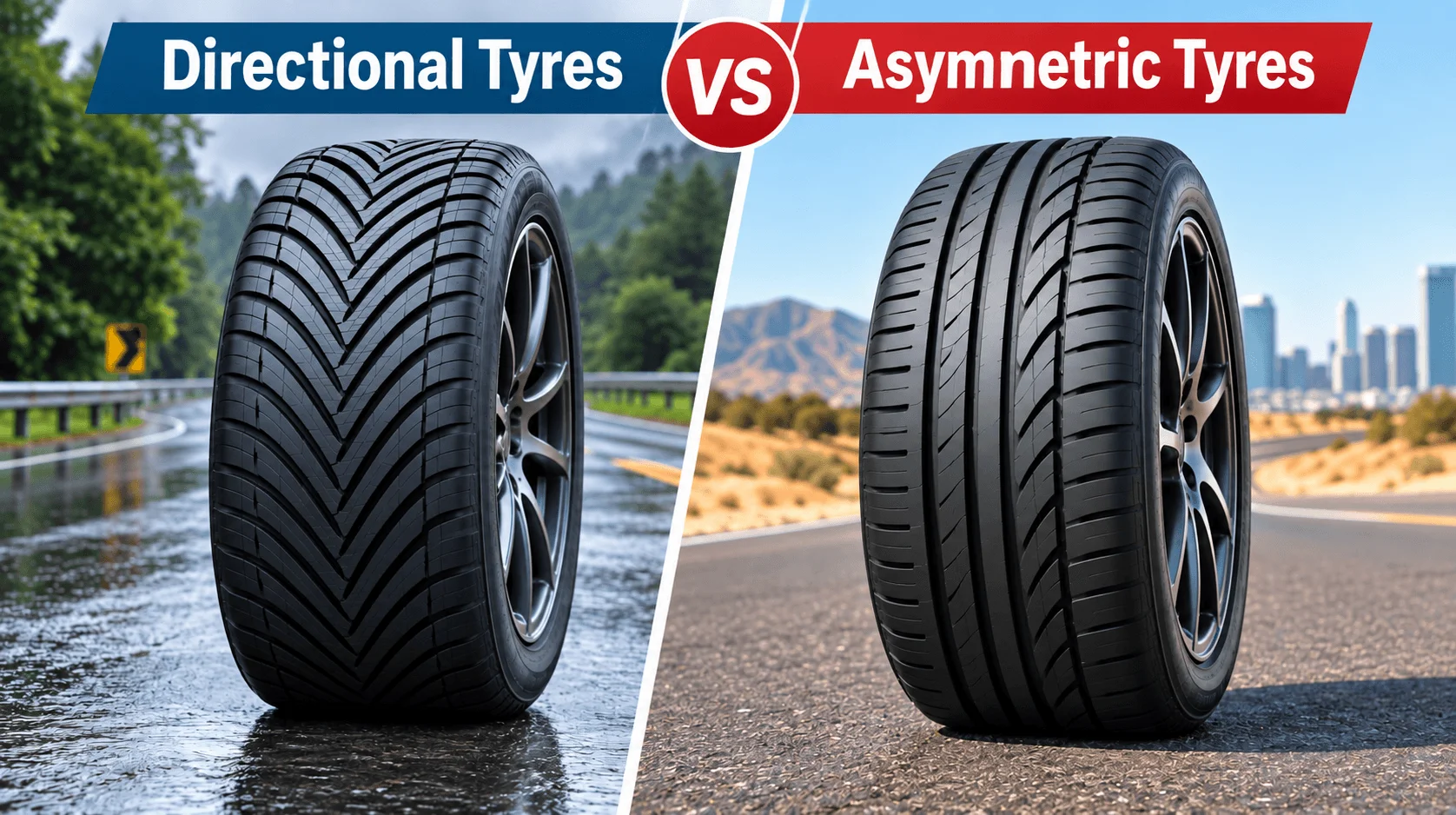
Directional tyres have a V-shaped or arrow-like tread pattern that works in one specific direction. Their design pushes water away from the tire, which is designed to improve water evacuation and wet-road traction while supporting handling stability. A directional tyre has a rotation arrow on its sidewall and must face the correct way when fitted. If fitted in the wrong direction, the tyre may not deliver the water evacuation, handling and traction characteristics it was designed to provide.
The tread design of these tyres gives them a clear purpose on roads where water drainage matters.
Asymmetric tyres have two different tread zones across the same tyre. The outer section usually focuses on cornering and dry-road stability while the inner section focuses more on water evacuation.
Unlike a directional tyre the tread does not need to follow one rolling direction. However, the tyre must still face the correct way along the markings such as Outside or Inside on the sidewall.
Asymmetric tyres are good for the drivers who use their cars for daily travel, highway trips and occasional spirited driving.
The main difference comes down to how each tread pattern works. Directional tyres follow one rolling direction while asymmetric tyres use different tread zones across the tyre.
For most everyday UAE driving, asymmetric tyres offer a balanced combination of dry grip, wet-road control, comfort and handling. Directional tyres can be a good choice for drivers who prioritise responsive handling and wet-road water evacuation.
Choose Directional Tyres If:
Choose Asymmetric Tyres If:
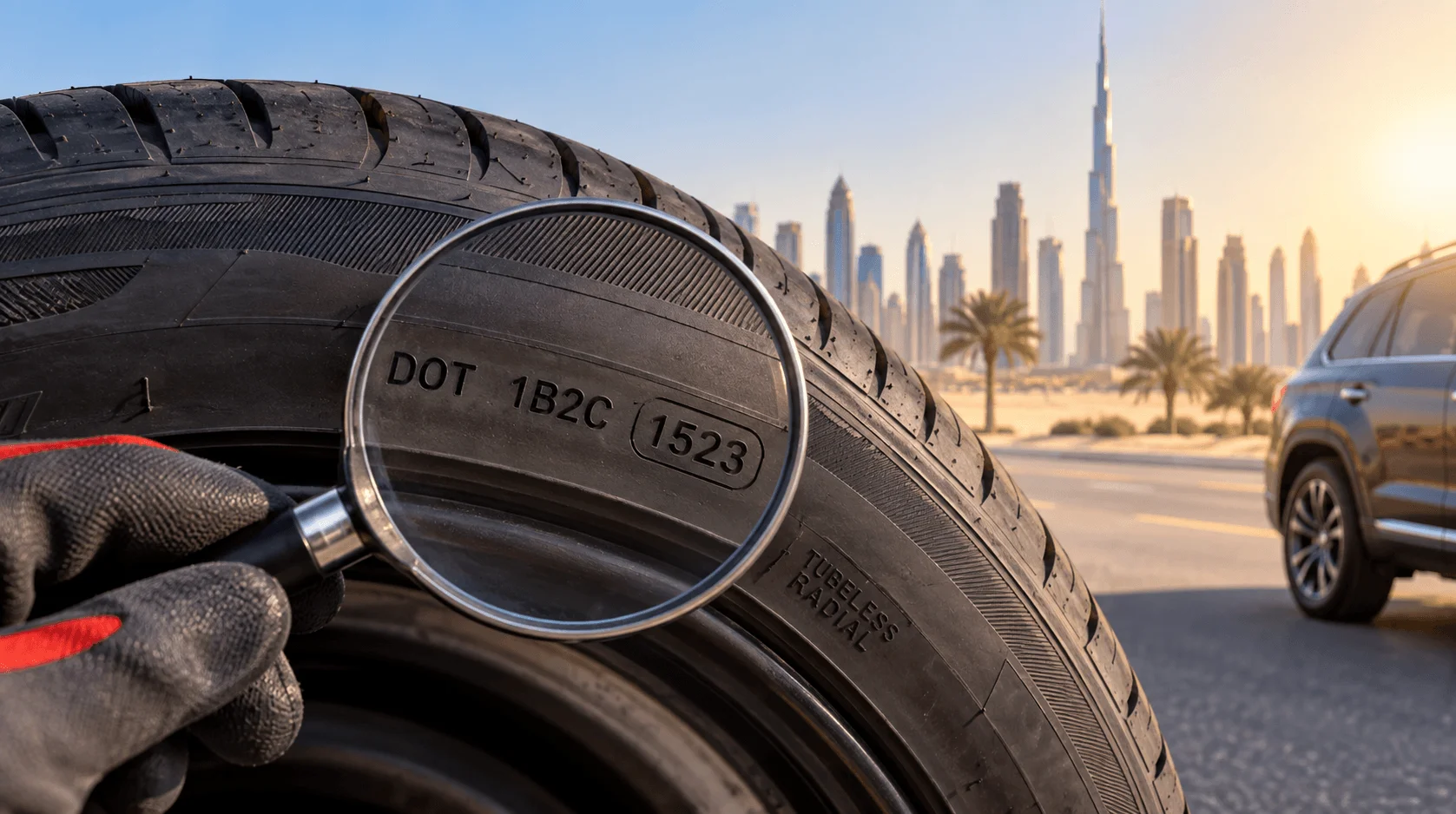
Whichever tread pattern you choose, consider the UAE's hot conditions and check the tyre age, size, load rating, speed rating and vehicle fitment before buying.
Tire.ae offers a wide range of car tyres in different sizes, brands and tread patterns to suit UAE driving needs.
With the key tyre tread pattern types explained above, you can make a more informed choice between directional and asymmetric tyres. Choose directional tyres for responsive handling and strong wet-road performance, or asymmetric tyres for balanced everyday driving. Explore car tyres deal at Tire.ae to find the right fit for your vehicle.
Check the sidewall and tread. A directional tyre has an arrow that shows its rotation direction. An asymmetric tyre has markings such as Outside or Inside that show the correct mounting position.
It is best to follow the vehicle maker's approved tyre specification rather than mix tread designs without guidance. Different tread types may behave differently. Ask a qualified tyre professional at tire.ae before fitting different patterns to one vehicle.
Yes, asymmetric tyres give better cornering grip because their outer tread has larger and stronger blocks that support the tyre during turns. The inner tread focuses more on water drainage and wet-road grip. This balance gives better control on corners with good road performance too.
Yes but the rotation pattern is limited. Directional tyres normally move from front to rear on the same side because they must keep their marked rolling direction.
Asymmetric tyres are the better choice for a mix of highway and occasional desert driving. Since the vehicle stays mainly on paved roads, asymmetric tyres provide the best balance. Directional tyres, on the other hand, are highly specialized for wet highway grip and straight-line speed.