Checkout using your account
Checkout as a new customer
Creating an account has many benefits:
Reviewed By
Tyre Specialist, Tire.ae
Mohammad Mahmoudi is the Operations Manager at Tire.ae, helping customers choose the right tyres for their vehicles. He ensures professional fitting services and a reliable experience across the UAE.
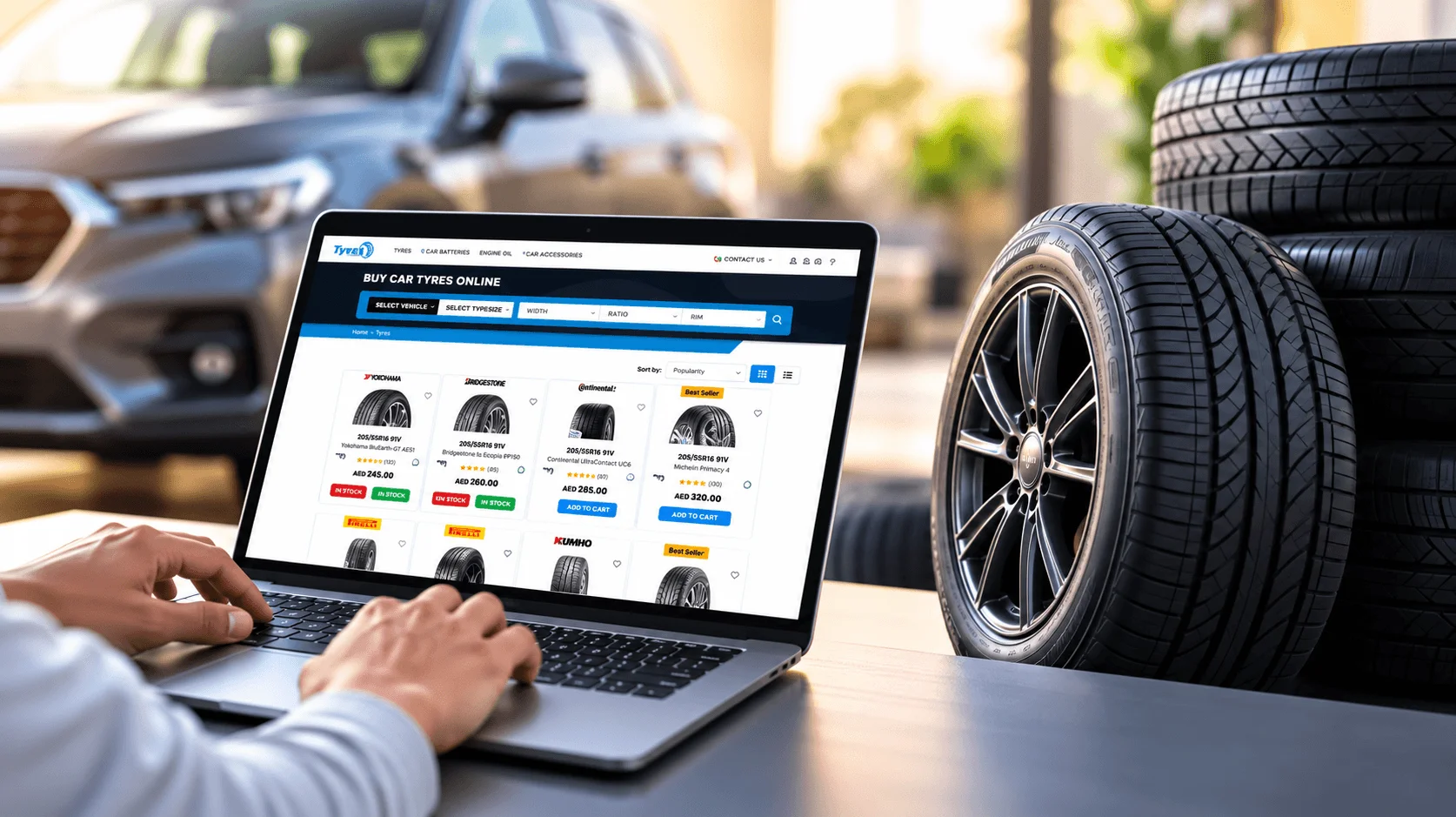
Buying tyres online is convenient, but choosing by price or brand alone can leave you with the wrong tyre for your vehicle. Before you buy tyres online, check the tyre size, load index, speed rating, manufacturing year, warranty, fitting arrangements and final fitted price.
Load index is the numerical code indicating the maximum load a tyre can carry under specified conditions, while speed rating is the letter indicating its maximum rated speed under specified load conditions. Both should meet the requirements specified for your vehicle.
Use this tyre buying checklist before completing your next order.
An online tyre shop may list dozens of options in the same size, but they can differ in load rating, speed rating, intended use, manufacturing year, warranty and fitted cost. These 10 questions help narrow the choice based on compatibility and value rather than the biggest discount.
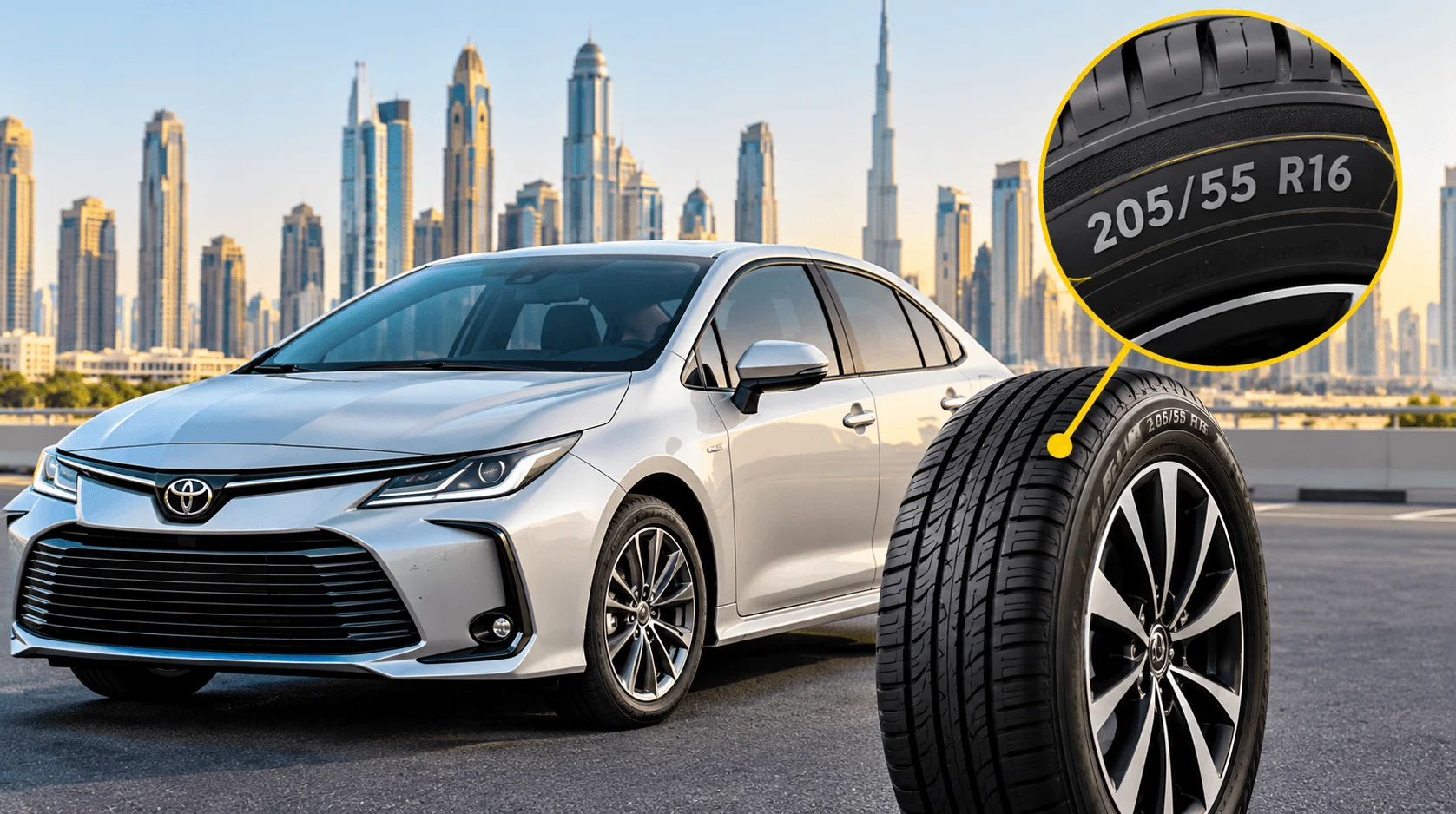
Start with the manufacturer-approved tyre size, which can usually be found in the owner’s manual or on the vehicle tyre placard. In a size such as 225/45 R17, 225 is the tyre width, 45 is the aspect ratio, R indicates radial construction and 17 is the wheel diameter in inches. Different variants of the same model can use different sizes, so confirm before ordering.
Do not check size alone. The tyre size is followed by the load index of the tyre, which is the maximum load-carrying capacity. The replacement tyre should meet the vehicle manufacturer’s required load rating. This is particularly important for heavier vehicles such as SUVs and many EVs, where fitting a tyre with insufficient load capacity can compromise suitability.
The speed rating is shown as a letter, usually after the load index. Different speed ratings represent different maximum rated speeds under specified conditions. Check the vehicle manufacturer’s requirement and do not choose a lower-rated tyre simply because it is cheaper.
Check the tyre’s manufacturing date before purchase. The four-digit date code on the sidewall identifies the production week and year. The first two numbers are used to designate the production week and the last two numbers to designate the year. For example, 2426 means the tyre was manufactured during week 24 of 2026.
Think beyond the correct size. Daily city driving, long UAE motorway journeys, performance driving and regular off-road use place different demands on car tyres. Compare features like comfort, road noise, wet performance and intended use to identify a tyre that really fits how you use your car.
Buy from a reputable retailer that provides clear product specifications, contact details, payment terms, warranty information and purchase documentation.
After delivery of the tyres, match the physical brand, model, size, ratings and manufacturing data with your order. A low price alone does not prove that a tyre is counterfeit, but vague specifications, missing manufacturing information or unclear seller details should prompt further checks.
Do not assume every tyre receives the same warranty. Warranty coverage varies by brand and product. Manufacturing-defect coverage is different from damage caused by punctures, impacts or normal wear. Look at the duration, conditions and claim procedure prior to purchase and before fitting, and retain your invoice and relevant warranty documentation.
Compare the final cost rather than the number shown beside the tyre. Check whether VAT, delivery, fitting, balancing, standard valves and old-tyre disposal are included. A cheaper advertised tyre can become more expensive once these services are added separately.
Understand the post-checkout process. Confirm whether the tyres will be delivered to you, sent directly to an installer or fitted through the retailer’s own network. When comparing offers, include fitting and wheel balancing in the total cost, especially if one retailer includes these services while another charges separately.
A good tyres deal combines the right specification, appropriate manufacturing year, suitable performance, warranty and fitting at a competitive final price. Do not automatically choose the lowest-priced listing. Compare similar tyre models and services provided to ensure a small saving does not translate to other compromises.
Once you have confirmed the correct size, compare specific tyre models rather than choosing by brand name alone.
Two tyres from the same brand can be designed for very different purposes. One might be more focused on quiet motorway driving and comfort, whereas another one can be more focused on performance or use in an SUV.
Compare:
This also makes promotional offers easier to compare. If two retailers sell the same tyre at different prices, check whether both prices include the same fitting and after-sales services.
Do not wait until installation is complete to inspect your order.
Check that the physical tyres match the tyre brand, model, size, load index and speed rating you selected online. Confirm the manufacturing date and inspect the tread, sidewalls and bead area for visible damage.
If you ordered a matching set, confirm that all tyres match the requested specification unless your vehicle is designed with different front and rear fitments.
Discuss any discrepancy with the retailer before installation.
A common error is to begin with price rather than compatibility with your vehicle. A discount has little value if the tyre is not suitable for your vehicle. Do not just select based on brand name either. Large tyre companies provide a variety of products which can be used on various cars and adapted to different driving conditions.
Finally, do not overlook fitting costs. An order that seems cheaper online might entail individual delivery, installation, and balancing, altering the actual price significantly. The total fitted cost is usually a more useful comparison than the tyre price alone.
Buying tyres online should make it easier to compare the right options, not just the cheapest ones. Confirm the tyre specification, manufacturing year, warranty and full fitted price before placing the order.
At Tire.ae, UAE drivers can search and compare car tyres by vehicle or tyre size across premium and value-focused brands. Current listings show key details such as tyre size, load and speed rating, production year, warranty period and fully fitted price, making it easier to compare suitable options before checkout.
Before choosing the biggest tyre deal, enter your vehicle or tyre size on Tire.ae, compare equivalent models and fully fitted prices, and book the option that matches your car’s specification rather than simply choosing the lowest listing.
Yes, provided you use a reputable retailer and verify the tyre specification, manufacturing information, warranty and fitting arrangements before ordering. Check the tyre specifications, manufacturing, warranty, payment terms and fitting instructions prior to ordering.
Check the owner’s manual or vehicle tyre placard. You can also look at the current tyre sidewall, but only if you are confident the existing fitment is correct.
Not necessarily. Manufacturing date is one factor to consider alongside tyre condition, specification, storage and applicable requirements. Nevertheless, the seller must also make the manufacturing year known to you so that you can make an informed comparison.
No. The price depends on the tyre brand, model, size, year of manufacture, promotions and other aspects. Rather than just basing it on price, compare the specifications, the purpose of the tyre, warranty and any fitting services.
It depends on the retailer. Some prices are tyre-only, while others include fitting and balancing. Before making your order, always check what the advertised price includes.
Usually, yes, provided the replacement tyres meet the required size, construction, load index, speed rating and axle requirements. Follow the vehicle manufacturer’s guidance where applicable. Adhere to manufacturer guidelines as necessary.