
Checkout using your account
Checkout as a new customer
Creating an account has many benefits:
Reviewed By
متخصص في الإطارات، Tire.ae
محمد محمودي هو مدير العمليات في Tire.ae، ويساعد العملاء على اختيار الإطارات المناسبة لمركباتهم. كما يحرص على تقديم خدمات تركيب احترافية وتجربة موثوقة في جميع أنحاء الإمارات
Yes, hitting a speed hump too hard can affect your wheel alignment, particularly if the impact damages or shifts a suspension, steering, wheel, or tyre component. This can cause your vehicle to pull to one side, the steering wheel to sit off-center, or your tyres to wear unevenly. If you notice any of these symptoms after a hard impact, have your vehicle inspected by a professional to determine whether the alignment or another component has been affected.
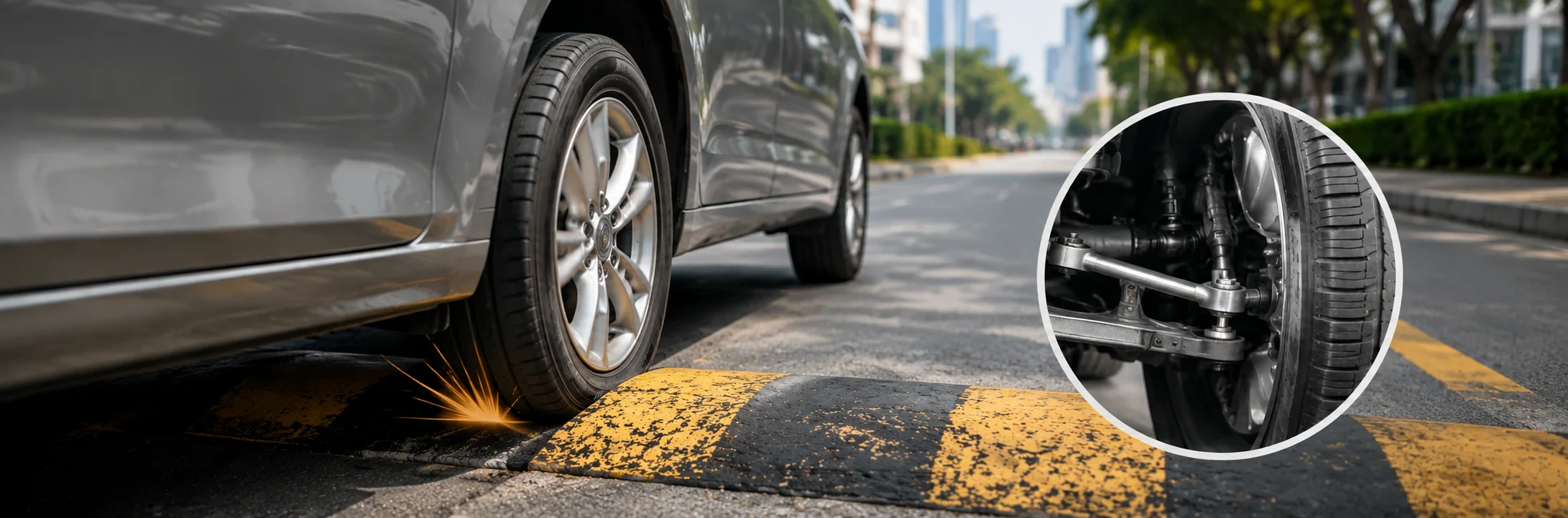
The speed hump on parking ramps is installed to slow down your vehicle; however, when you pass over it at high speeds, the impact can damage your suspension and steering systems. Even though there is no visible damage to your vehicle, the impact can alter your car wheel alignment.
In this blog, we will discuss how speed humps affect wheel alignments, warning signs of wheel misalignment, and when to schedule wheel alignment inspections and car services.
Wheel alignment is a service that adjusts the angles of your vehicle's wheels so they are positioned correctly relative to the road and the vehicle's suspension system. It helps ensure that the tyres maintain proper contact with the road and that the vehicle tracks straight while driving.
Hitting a speed hump at high speed can potentially cause wheel misalignment if the impact damages or shifts a steering, suspension, wheel, or tyre component. Driving over it at a controlled speed helps reduce the impact on these components.
The Dubai Roads and Transport Authority (RTA) Light Motor Vehicle Handbook identifies speed humps through warning signs and road markings, helping drivers slow down and approach them safely. Always follow the posted signs and adjust your speed to the road conditions and speed hump design.
If your car pulls to one side, the steering wheel sits off-centre, or you notice uneven tyre wear, unusual noises, or vibrations after an impact, have the vehicle inspected to determine whether the alignment or another component has been affected.
A hard impact does not only affect alignment, but other parts of your vehicle can also suffer damage depending on the severity of the impact.
If the wheel alignment is affected due to the impact on a speed hump, your car would typically exhibit some common signs that you should look out for.
Your car drifting to one side while driving straight could be due to misalignment If the wheel alignment is affected due to the impact on a speed hump, your car would typically exhibit some common signs that you should look out for.of the wheel.
If the steering wheel of your car is not centered when driving straight, then it may indicate a problem with wheel alignment.
Unaligned wheels lead to uneven wear and tear of tires, which affects their lifespan, requiring a premature tire change service.
Vibration after a hard impact can indicate a bent wheel, tyre damage, wheel imbalance, suspension damage, or an alignment issue. A professional inspection can determine the actual cause.
Incorrect wheel alignment can increase rolling resistance and tyre scrub, which may contribute to higher fuel consumption.
No, a properly designed speed hump should be negotiated at the appropriate speed, but a hard impact can still damage or shift suspension, steering, wheel or tyre components.
There are certain measures you should take after driving over speed humps to know whether your car is okay.
The right driving practices and preventive maintenance will eliminate the risks of alignment issues due to common driving obstacles.
If you suspect that a speed hump has affected your wheel alignment, contact Tire.ae for a professional inspection. Our specialists can check your wheel alignment, tyres, wheels and related components and recommend the appropriate wheel alignment services, if required.
إذا كانت سيارتك تميل إلى الانحراف نحو أحد الجانبين، أو لم تكن عجلة القيادة في الوضع المركزي، أو كان هناك تآكل غير متساوٍ في الإطارات، أو اهتزازات، أو انخفاض في كفاءة استهلاك الوقود، فقد يكون ذلك بسبب خلل في محاذاة العجلات.
نعم، فالصدمة المفاجئة الناتجة عن المرور فوق مطب سرعة عند مخارج مراكز التسوق قد تتسبب في تلف أذرع التعليق، أو الدعامات، أو ممتصات الصدمات، أو آلية التوجيه، أو العجلات، أو الإطارات.
في حالة حدوث أي تغيير في سلوك السيارة أو التوجيه أو تآكل الإطارات بعد ذلك التصادم، يُنصح بإجراء فحص لمحاذاة العجلات.
عادةً ما ينبغي إجراء ضبط محاذاة العجلات كل 10,000 إلى 15,000 كيلومتر. ويتم ذلك أيضًا في إطار الصيانة الدورية للسيارة أو عند تركيب إطارات جديدة.
على الرغم من أن سيارتك لا تزال صالحة للقيادة، فإن القيادة مع وجود خلل في محاذاة العجلات سيؤدي إلى تآكل الإطارات بشكل متسارع، وفقدان السيطرة أثناء القيادة، وتدني كفاءة الكبح، وزيادة استهلاك الوقود. إذا كانت سيارتك تنحرف إلى أحد الجانبين أو كنت تشعر باهتزازات، فاحجز موعدًا لخدمة محاذاة العجلات على الفور.