
المجموع الإجمالي:

لديك فرصة للفوز لطيفة خصم كبيرة من الدهون. هل أنت جاهز؟
يمكنك تدوير العجلة مرة واحدة فقط. إذا فزت، فسيكون قسيمة الخصم صالحة لمدة 30 يومًا من تاريخ الفوز.

العناية بالاطارات والعجلات
خدمات السيارات
عروض الفروع
تغيير الزيت
الفرامل والتعليق
العناية بالبطارية
Checkout using your account
Checkout as a new customer
Creating an account has many benefits:
تمت المراجعة بواسطة
متخصص في الإطارات، Tire.ae
محمد محمودي هو مدير العمليات في Tire.ae، ويساعد العملاء على اختيار الإطارات المناسبة لمركباتهم. كما يحرص على تقديم خدمات تركيب احترافية وتجربة موثوقة في جميع أنحاء الإمارات
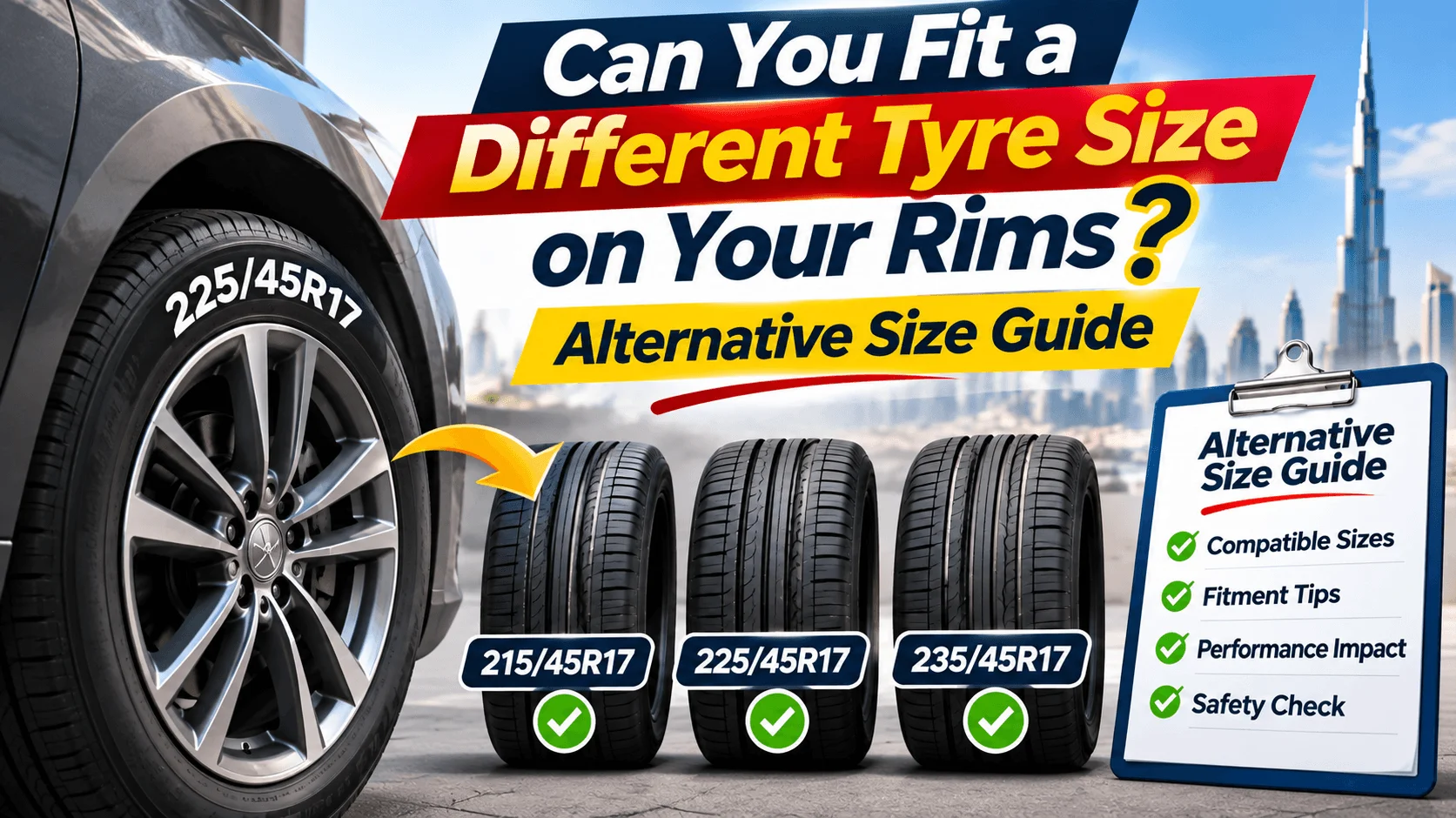
Yes, you can sometimes fit a different tyre size on the same rims, but the alternative must match the wheel width and meet your vehicle’s load capacity, speed rating, clearance, and overall diameter requirements. A tyre that fits physically is not necessarily a safe or approved fitment.
Before buying, check the tyre sizes your vehicle manufacturer approves in the owner’s manual or on the vehicle’s tyre placard. Tyres with the same dimensions can have different load indexes and speed ratings, so size alone does not confirm compatibility.
The tyre sizes code identifies its nominal width, aspect ratio, construction and wheel diameter. The load index indicates the tyre’s rated load capacity under specified conditions, while the speed rating identifies its rated maximum speed under those conditions.
The sidewall code tells you much more than the wheel diameter.
For example, in 225/45 R17:
The final number identifies the wheel diameter the tyre is designed to fit. However, you must also check the approved rim-width range, overall diameter, load index and speed rating before choosing an alternative.
A 225/45 R17 and a 245/40 R17 both fit an 18-inch wheel diameter, but that doesn't mean they are automatically suitable for the same rim width or vehicle.
Sometimes. Tyre manufacturers state a recommended range of rim widths in each tyre size. An otherwise approved tyre that's slightly wider can fit on a pre-existing rim, provided the rim is in the approved range and the vehicle has enough clearance.
Every tyre size has an approved rim-width range. Fitting a tyre to a wheel outside that range can alter its intended profile and affect handling, steering response and performance. Checking only the wheel diameter isn't enough; confirm the wheel width suits the chosen tyre.
A tyre that clears the wheel arch while the car tyre is stationary may still contact the wheel-arch liner, bodywork or suspension when the steering is turned or the suspension moves over bumps. Check clearance throughout the steering range and suspension travel, not just when the vehicle is parked.
Perhaps, but the same checks still apply. A narrower tyre or a different aspect ratio can change the tyre’s profile, handling characteristics and overall diameter. The alternative must also remain within the wheel’s approved width range and meet the vehicle’s load and speed requirements.
Don't assume a narrower tyre is necessarily safer or more efficient. The right tyre size depends on the wheel, the vehicle, and the intended use.
The overall diameter should remain within the range permitted for your vehicle, and the alternative size must be approved or confirmed as compatible with the manufacturer’s specifications. No single diameter tolerance should be assumed suitable for every vehicle.
If the alternative tyre is significantly taller or shorter, it can affect:
For this reason, changing tyre size often requires adjusting more than one measurement. A wider tyre may need a lower aspect ratio to keep the overall diameter similar, but you still need to check the full fitment.
For example, moving to a wider tyre may require a lower aspect ratio to keep the overall diameter close to the original.
An online tyre calculator can help compare dimensions, but it cannot confirm whether the alternative size is approved for your exact vehicle.
Yes. They are equally crucial as physical fitment. Tyres of the same nominal size can have different load indexes and speed ratings. For example, load index 91 corresponds to a rated load capacity of 615 kg per tyre, while load index 94 corresponds to 670 kg under specified conditions.
The speed-rating letters also matter: in the examples above, V and Y indicate different rated maximum speeds. Always meet the vehicle manufacturer’s minimum load and speed requirements. Don't choose an alternative size or tyre specification just because it is cheaper or easier to find. Confirm that the size, load index, speed rating, and construction suit your vehicle.
Yes, but only within a properly calculated alternative fitment.
The aspect ratio controls sidewall height relative to tyre width. A lower-profile tyre generally has a shorter sidewall, while a higher-profile tyre has more sidewall.
Changing a profile can affect:
A lower-profile tyre may feel more direct, but it can also make sharp road impacts more noticeable.
Before completing an order, check the full fitment, not just the width and wheel diameter.
Confirm:
If one of these points is unclear, verify the fitment before ordering.
This is particularly important when comparing tyre listings in Dubai, as tyres with the same nominal size can have different load indexes, speed ratings, construction and intended applications.
No. A wider or taller tyre can change appearance or handling, but it can also introduce clearance, weight, or rolling-diameter issues. Similarly, a bigger tyre is not necessarily better for grip or lifespan.
Tyre performance depends on the tyre model, compound, construction, and the vehicle's setup, not size. The right alternative meets the vehicle manufacturer’s requirements for fitment, load, speed, and clearance.
Only consider a cheaper alternative if it fits your vehicle. A lower price isn't worth it if the tyre falls outside the approved rim-width range, reduces clearance, or fails to meet the required load and speed ratings. Confirm the complete fitment first, then compare the total fitted cost of suitable options.
If you are considering an alternative tyre size, confirm compatibility before ordering. A tyre that fits the wheel but doesn't meet the vehicle’s requirements isn't a suitable replacement.
At Tire.ae, UAE drivers can tyre by vehicle or tyre size and compare available options online. Our experts also advise customers to check their current tyre size before purchasing but use the vehicle’s manual or tyre placard to confirm the approved specification.
If you want to change tyre size, verify fitment first, then compare compatible options on Tire.ae rather than choosing based on appearance or headline price alone.
ربما. يجب أن يكون الإطار متوافقًا مع عرض العجلة، وأن يوفر مسافة كافية بين الإطار والعجلة، وأن يستوفي متطلبات الحمولة والسرعة والقطر الإجمالي للمركبة.
نعم، شريطة أن يتناسب الإطار البديل مع عرض العجلة الحالية، وأن يستوفي متطلبات التركيب والحمولة والسرعة والارتفاع المسموح به المحددة للسيارة.
نعم. يؤثر العرض ونسبة العرض إلى الارتفاع أيضًا على القطر الإجمالي للإطار، حتى عندما يكون قطر العجلة هو نفسه.
ليس دائمًا، ولكن قد تحتاج إلى نسبة عرض إلى ارتفاع أقل للحفاظ على قطر الإطار الإجمالي قريبًا من المواصفات الأصلية.
يمكن للآلة الحاسبة مقارنة الأبعاد، لكنها لا تستطيع التأكد من موافقة العجلات، أو الخلوص الأرضي للمركبة، أو متطلبات الحمولة، أو التوافق مع مواصفات الشركة المصنعة.
فقط إذا كان البديل مناسبًا لسيارتك. تأكد أولاً من ملاءمته تمامًا، ثم قارن أسعار الخيارات المناسبة.