
Checkout using your account
Checkout as a new customer
Creating an account has many benefits:
Reviewed By
Tyre Specialist, Tire.ae
Mohammad Mahmoudi is the Operations Manager at Tire.ae, helping customers choose the right tyres for their vehicles. He ensures professional fitting services and a reliable experience across the UAE.
Yes, hitting a speed hump too hard can affect your wheel alignment, particularly if the impact damages or shifts a suspension, steering, wheel, or tyre component. This can cause your vehicle to pull to one side, the steering wheel to sit off-center, or your tyres to wear unevenly. If you notice any of these symptoms after a hard impact, have your vehicle inspected by a professional to determine whether the alignment or another component has been affected.
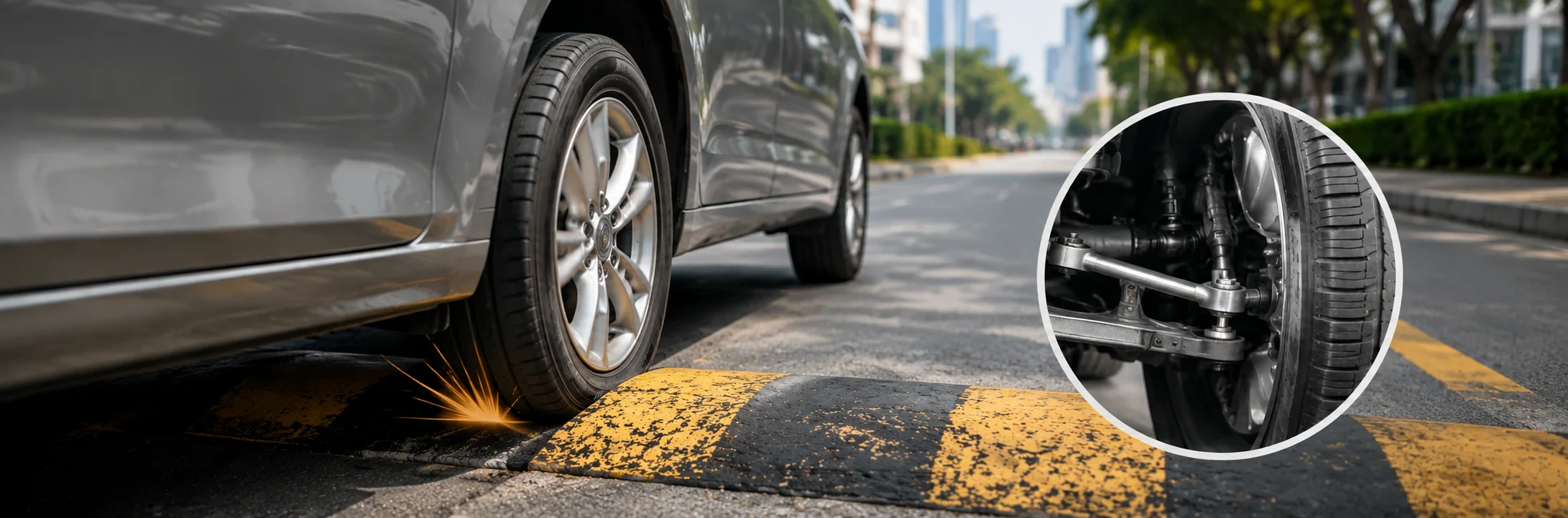
The speed hump on parking ramps is installed to slow down your vehicle; however, when you pass over it at high speeds, the impact can damage your suspension and steering systems. Even though there is no visible damage to your vehicle, the impact can alter your car wheel alignment.
In this blog, we will discuss how speed humps affect wheel alignments, warning signs of wheel misalignment, and when to schedule wheel alignment inspections and car services.
Wheel alignment is a service that adjusts the angles of your vehicle's wheels so they are positioned correctly relative to the road and the vehicle's suspension system. It helps ensure that the tyres maintain proper contact with the road and that the vehicle tracks straight while driving.
Hitting a speed hump at high speed can potentially cause wheel misalignment if the impact damages or shifts a steering, suspension, wheel, or tyre component. Driving over it at a controlled speed helps reduce the impact on these components.
The Dubai Roads and Transport Authority (RTA) Light Motor Vehicle Handbook identifies speed humps through warning signs and road markings, helping drivers slow down and approach them safely. Always follow the posted signs and adjust your speed to the road conditions and speed hump design.
If your car pulls to one side, the steering wheel sits off-centre, or you notice uneven tyre wear, unusual noises, or vibrations after an impact, have the vehicle inspected to determine whether the alignment or another component has been affected.
A hard impact does not only affect alignment, but other parts of your vehicle can also suffer damage depending on the severity of the impact.
If the wheel alignment is affected due to the impact on a speed hump, your car would typically exhibit some common signs that you should look out for.
Your car drifting to one side while driving straight could be due to misalignment If the wheel alignment is affected due to the impact on a speed hump, your car would typically exhibit some common signs that you should look out for.of the wheel.
If the steering wheel of your car is not centered when driving straight, then it may indicate a problem with wheel alignment.
Unaligned wheels lead to uneven wear and tear of tires, which affects their lifespan, requiring a premature tire change service.
Vibration after a hard impact can indicate a bent wheel, tyre damage, wheel imbalance, suspension damage, or an alignment issue. A professional inspection can determine the actual cause.
Incorrect wheel alignment can increase rolling resistance and tyre scrub, which may contribute to higher fuel consumption.
No, a properly designed speed hump should be negotiated at the appropriate speed, but a hard impact can still damage or shift suspension, steering, wheel or tyre components.
There are certain measures you should take after driving over speed humps to know whether your car is okay.
The right driving practices and preventive maintenance will eliminate the risks of alignment issues due to common driving obstacles.
If you suspect that a speed hump has affected your wheel alignment, contact Tire.ae for a professional inspection. Our specialists can check your wheel alignment, tyres, wheels and related components and recommend the appropriate wheel alignment services, if required.
If your car tends to veer to one side, the steering wheel is not centered, there is uneven wear on the tires, vibration, or decreased fuel efficiency, then your wheel alignment could be affected.
Yes, the sudden impact of hitting a speed hump at shopping mall exits can damage your suspension arms, struts, shock absorbers, steering mechanism, wheels, or tires.
In case of any change in handling, steering, or tyre wear after that impact, then it is advised that you get your wheel alignment checked.
Usually, wheel alignments should be done after every 10,000 to 15,000 km. This is also done along with routine servicing of the vehicle or when new tyres are fitted.
Although your vehicle is still drivable, driving with improper wheel alignment will result in accelerated tire wear, loss of control while driving, poor braking, and increased fuel consumption. If your car pulls to one side or feels vibration, book a wheel alignment service immediately.