




From Road Tyres to Off-Road Tyres: A Comprehensive Guide to Different Types of Tyres
- Nov 20, 2026
MM
Reviewed By
Mohammad Mahmoudi
Tyre Specialist, Tire.ae
Mohammad Mahmoudi is the Operations Manager at Tire.ae, helping customers choose the right tyres for their vehicles. He ensures professional fitting services and a reliable experience across the UAE.
Reviewed on November 20, 2026
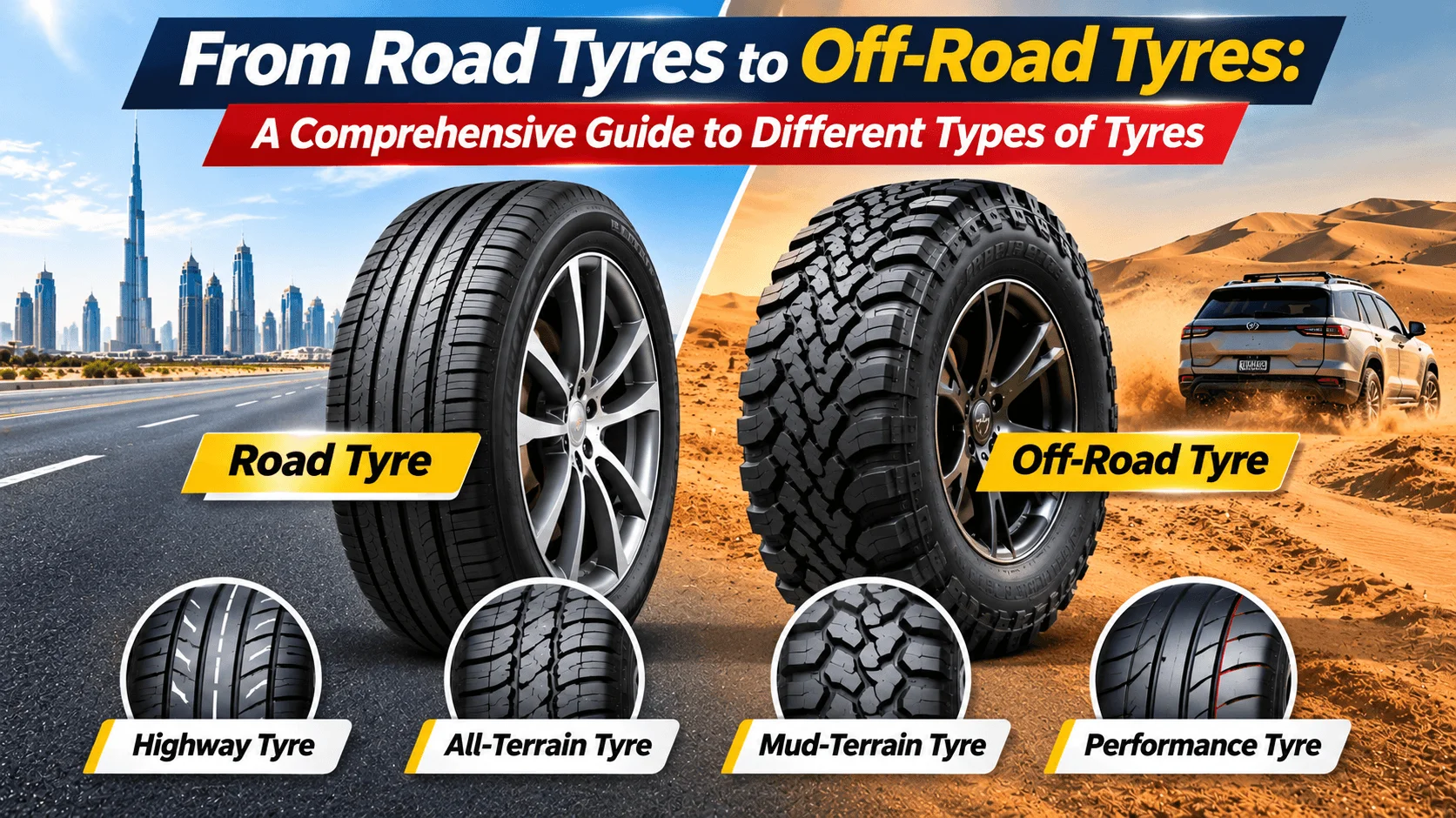
The main difference between road and off-road tyres is their tread pattern, construction, and intended use. Road Car tyres are tailored to paved roads and motorways, while off-road tyres provide added grip on rough or uneven roads. All-terrain tyres are a hybrid of the two, giving customers who use both regularly an option.
There is no one-size-fits-all answer; the right choice depends on your car, your driving style, and the roads you drive on. The manufacturer-approved size, load index, and speed rating are things to consider before purchasing tyres. These specifications help to identify an appropriate tyre for your vehicle.
What Are the Main Types of Road Tyres?
Road tyres are intended for cars that drive on paved roads most of the time. Their tread patterns are usually based on road grip, braking, comfort, stability, and noise control.
Common types include:
- Touring tyres: These tyres are for everyday driving and typically focus on comfort, predictable handling, and longevity. They suit commuters and families who primarily drive in cities or on motorways.
- Highway tyres: Highway-terrain tyres (H/T) are often mounted on SUVs and larger vehicles and are designed primarily for paved roads. Their comparatively close patterns of tread ensure stability on the road and a less noisy ride than the more aggressive off-road treads.
- Performance tyres: These tyres focus on steering response, cornering grip, and handling. They are usually chosen in performance-oriented cars, but their comfort and tread-life features are model-specific.
- Fuel-efficient tyres: These are designed in such a way that they minimise the rolling resistance, which is the energy wasted by the rolling of the tyre. Low rolling resistance may help reduce the energy required to power a car, though the benefits may vary with the car, tyre, and driving conditions.
Road tyres are generally the practical choice if you rarely leave paved roads. Choosing an aggressive off-road design for everyday motorway driving may introduce unnecessary noise and reduce comfort.
What Are All-Terrain Tyres?
All-terrain (A/T) tyres are designed to perform on paved roads and some off-road surfaces, such as gravel, dirt tracks, and rough terrain. Their tread blocks are typically more open and pronounced than those on highway tyres, helping them find traction on loose surfaces.
They can be appropriate for SUV and 4x4 owners who might travel on desert tracks, gravel roads or light trails once a week but mostly during the week. Nevertheless, there is a trade-off to all-terrain tyres. They can generate more road noise, ride firmer, or exhibit greater rolling resistance than road-oriented ones, depending on the model.
The balance of on-road and off-road capability varies across A/T tyres. Examine the all-terrain label, but also look at the description and performance data for the specific model from the manufacturer.
What Are Mud-Terrain and Other Off-Road Tyres?
Off-road tyres are designed to provide traction on loose, uneven or challenging surfaces where road-focused tyres may struggle. Their treads and types of construction depend on the ground which they are supposed to be used in.
Common off-road tyre types include:
- Mud-terrain (M/T) tyres: They have huge, widely spaced tread blocks that assist it in gripping muddy and unstable soil. The open pattern also helps clear mud from the tread; however, it can increase noise and make for an uncomfortable ride on paved roads.
- Rock-crawling tyres: Intended for rough, rocky environments, these tyres have increased structure and tread patterns aimed at keeping the tyre in traction on rough surfaces. They are niche products, so vehicle compatibility and intended use are important.
- Sand-focused tyres: These tyres are designed to provide traction on loose sandy surfaces. Their suitability depends on the tread design, vehicle and driving conditions. When driving on sand, follow the vehicle and tyre manufacturer's guidance on pressure adjustments, and restore the recommended road pressure before returning to paved roads.
An off-road tyre is not automatically suitable for every type of terrain. Mud, sand, gravel and rocks place different demands on the tread and tyre construction. Choose according to the conditions you actually encounter.
How Do Highway, All-Terrain and Mud-Terrain Tyres Differ?
The three common SUV and 4x4 categories have different strengths.
Which Tyres Are Best for Driving in the UAE?
The most suitable tyre depends on where you drive and the type of driving. Highway-terrain (H/T) or road-oriented touring tyres are generally better suited for regular commuting in Dubai, Abu Dhabi, and other UAE cities than aggressive off-road tyres.
An all-terrain tyre can be a more practical compromise if you own a 4x4 and regularly visit desert locations or off-road areas. A specialised off-road option will be required when drivers often face difficult mud or rough roads.
Things to consider when making a selection include:
- Driving surface: Think about how often you use motorways, city streets, gravel tracks or desert routes.
- Comfort and noise: Aggressive tread patterns can be louder on paved roads.
- Grip and braking: Compare wet- and dry-road performance for regular driving, as well as the traction you need for off-road use.
- Durability: Check the tyre’s construction, load rating and suitability for the terrain.
- Vehicle compatibility: Confirm the approved tyre size, load index and speed rating before purchasing.
A tyre designed for demanding off-road conditions is not necessarily the safest or most comfortable choice for everyday road use.
How Can You Choose the Right Tyre Brand and Size?
Start with your vehicle manufacturer's approved specifications. Tyre size, load index, and speed index should meet the vehicle requirements. The load index indicates the maximum load a tyre can carry under specified conditions, while the speed rating identifies the maximum speed at which it is rated to operate under specified conditions.
Second, compare individual models from established tyre brands. Even the tread design of two different products from the same manufacturer can differ greatly in design and use. Review product information provided by the manufacturer and, where possible, reliable independent tests.
When comparing prices at a tyre shop UAE, do not choose a tyre based on a discount alone. Check its manufacturing date, warranty, installation cost and suitability for your vehicle. Always search using your vehicle's approved tyre specifications rather than selecting a product based only on its appearance or price.
How Can You Maintain Road and Off-Road Tyres?
Periodic maintenance helps detect issues before they develop into serious problems. Measure tyre pressure when cold, and keep it to the values recommended by the car manufacturer. Check the sidewalls and treads for any cuts, cracks, bulges and uneven wear.
Following off-road use, check for a rock stuck in the tread or damage from sharp rocks or other hazards. Clean the tyres (where needed) and call in a professional to check them when you see evident damage or excessive vibration. On vehicles used both on-road and off-road, also check pressure before subjecting them to normal highway conditions.
Conclusion
Choosing between road, all-terrain and off-road tyres depends on the surfaces you drive on most often. Road-focused tyres are generally suitable for everyday commuting, while all-terrain and specialised off-road options suit drivers who regularly explore gravel tracks, desert routes, or challenging terrain. Always confirm your vehicle's approved tyre specifications before purchasing.
Visit Tire.ae to explore available tyre options, compare models and find suitable products for your vehicle. Whether you need tyres for daily city driving or off-road use, choose a product that matches your driving requirements and vehicle specifications.
{{Share}}
Frequently Asked Questions
Road tyres are designed mainly for paved surfaces, prioritising grip, comfort and handling. Off-road tyres have tread designs and construction intended to provide traction on loose or uneven terrain.
Yes. Many all-terrain tyres are designed for both paved roads and off-road use. However, they may be noisier and less comfortable than highway-focused tyres, depending on the model.
They can be used on roads if the specific tyre is approved for that application, but their aggressive tread patterns can produce more noise and reduce ride comfort compared with road-focused tyres.
The right option depends on the sand conditions, vehicle and frequency of off-road use. Suitable all-terrain or sand-focused tyres may be considered, provided they meet the vehicle’s requirements and the manufacturer’s recommendations.
Wear depends on the tyre model, pressure, alignment, driving style and road conditions. Some aggressive off-road tyres may wear differently or provide less refined performance on paved roads than highway tyres.

November 1, 2026
Latest UAE Petrol, Diesel Price Update November 2026