
Checkout using your account
Checkout as a new customer
Creating an account has many benefits:
Reviewed By
متخصص في الإطارات، Tire.ae
محمد محمودي هو مدير العمليات في Tire.ae، ويساعد العملاء على اختيار الإطارات المناسبة لمركباتهم. كما يحرص على تقديم خدمات تركيب احترافية وتجربة موثوقة في جميع أنحاء الإمارات
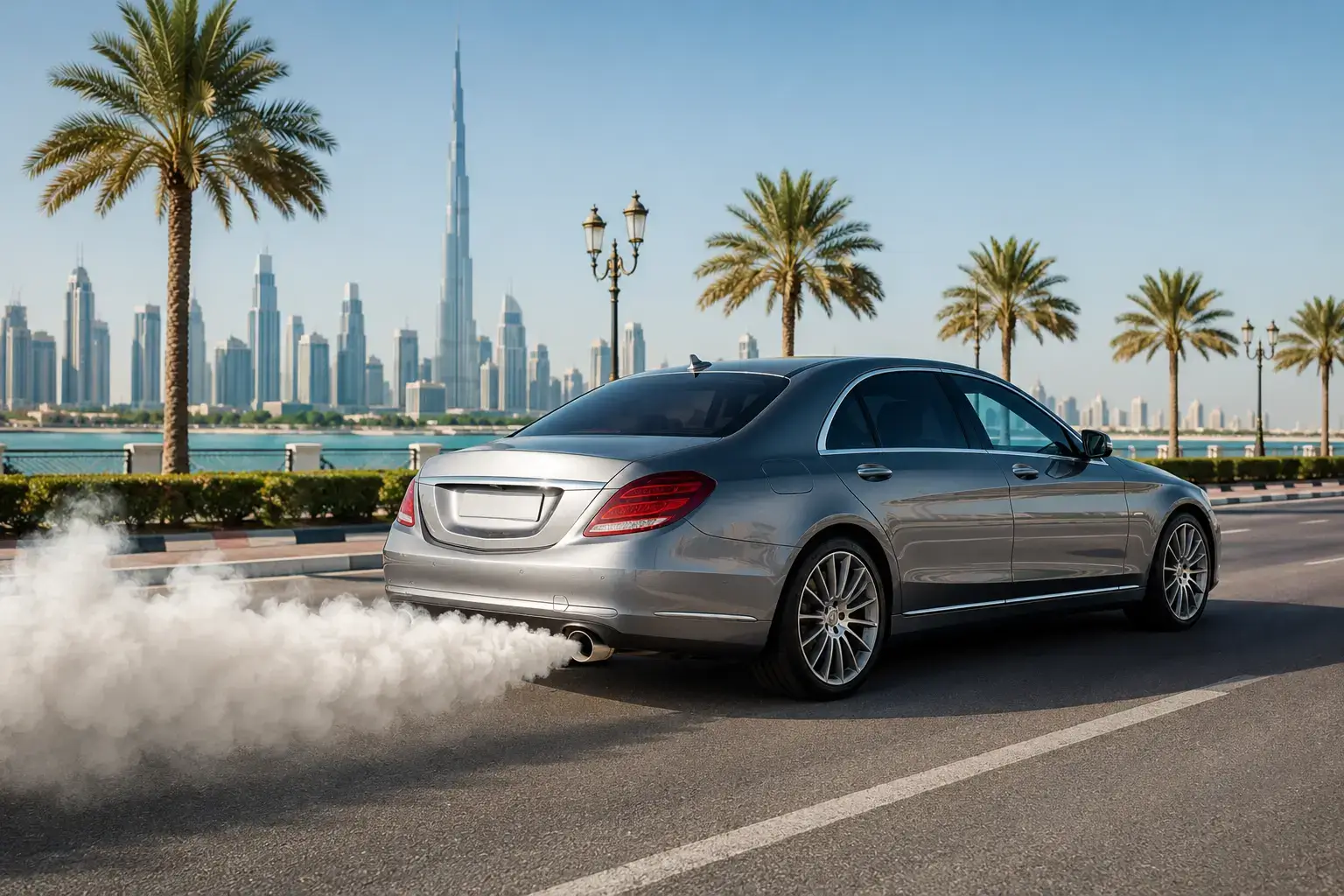
Coloured exhaust smoke is often your car's way of telling you that something isn't working as it should. While a small amount of vapor can be normal in certain conditions, persistent coloured smoke from the exhaust usually indicates an underlying issue with the engine, fuel system, or cooling system. Recognizing the color of the exhaust smoke can help you save money and spare your engine from major damage.
Let’s learn about the different exhaust smoke colors!
Exhaust smoke refers to the gas that comes out of the exhaust pipe on your vehicle when you run the engine. During combustion, your engine burns fuel and air together, creating very hot, high-energy gases which are expelled through the tailpipe of your car. Most of the time, under normal conditions, exhaust gas emissions will not be seen or will only appear as a small amount of vapour when it’s cold outside.
If the exhaust smoke is coloured, too thick, or continues to come out of the tailpipe after the engine has been running for a while, this usually indicates a problem with your car. This type of problem can impact your vehicle's power, fuel economy, emissions, and overall dependability.
Different colors of smoke can be an indication of different problems with engines. Knowing what each color means will assist you in diagnosing problems before they become expensive repairs.
If you see blue smoke coming from the exhaust of your vehicle, your car is burning oil. This is caused when oil enters the combustion chamber from worn engine components, or as a result of other forms of engine damage.
The blue smoke can be caused by several reasons, including worn valve seals, broken piston rings, overall engine wear & tear, or oil leaks into the combustion chamber.
Ignoring blue smoke emissions can result in damage to your engine, decreased fuel mileage, increased costs for spark plugs, catalytic converters, and piston ring replacement, and added expenditure to repair cylinder damage.
The source of any oil leaks must be determined by a qualified technician. If required, change the seals, install new piston rings, and change the oil to avoid any future damage.
When you see a vehicle emitting black smoke, it is because the fuel-to-air ratio goes out of balance, resulting in an engine that burns excessive amounts of fuel.
The cause of black smoke may include dirty or worn-out air filters, defective fuel injectors, malfunctioning sensors, and/or a fuel mix that is too rich for the combustion process.
The black smoke can result in poor fuel efficiency, and the amount of emissions produced from excessive combustion fuel will leave carbon build-up on the engine and spark plugs, which will ultimately result in an engine misfire.
The solution is to have the fuel systems inspected thoroughly and any related components, such as air filters, replaced if necessary.
Brown smoke is relatively uncommon compared to blue, black, white, or gray exhaust smoke. In rare cases, brownish exhaust smoke may indicate contamination, rust particles, or combustion-related issues.
Causes of brown smoke could include moisture in the exhaust, residue left from older fuels, rust particles within the exhaust system, or a small combustion problem that occurs when the engine starts up.
Although brown smoke in most cases is not harmful and will generally dissipate on its own, if your brown smoke problem is persistent, you may have a contamination issue in your exhaust or corrosion, both of which could eventually lead to combustion problems in your engine.
Brown smoke may not indicate a serious engine problem, persistent brown smoke should be inspected by a professional technician.
White smoke is one of the most serious smoke colors produced by an engine since white smoke indicates there is coolant getting into the combustion chamber.
The primary cause of white smoke is coolant leaking into the combustion chamber due to issues with the head gasket, engine block, cylinder head, or any another failure in the cooling system.
When coolant leaks into the engine, you might experience overheating of the engine, corrosion, a decrease in total power generated by the engine, and other internal engine damage.
The entire coolant system needs to be inspected to determine the cause of any leakage, as well as any necessary repairs. It is critical to fix the issue early before any serious damage to the engine occurs.
It can be quite hard to pinpoint where gray smoke is coming from, as there are many issues that may lead to gray smoke, including problems related to the engine, transmission, and turbocharger.
Some reasons for gray smoke include a problem in the transmission, turbocharger, oil burning, or the exhaust system.
Gray smoke can affect engine performance, increase emissions, damage the catalytic converter, and even cause engine overheating.
Proper inspection of the transmission system, turbocharger, and exhaust system should be conducted to determine what the actual problem is.
Some exhaust smoke may go away after a few minutes, but there are instances when the matter needs to be attended to by professional car mechanical service. Thick smoke or colored smoke must not be overlooked since it indicates a serious mechanical problem that can worsen overtime.
Practicing preventive maintenance measures will significantly increase the durability of your engine and your automobile by cutting down expenses related to engine repairs.
Exhaust smoke is one of the major indicators of an issue in your car. The underlying issue causing the exhaust smoke can be wide, from engine troubles and worn-out piston rings to using low-grade fuel. Knowing what color the exhaust smoke from your car is can give you a good idea about the kind of action needed.
At Tire.ae, our experienced technicians provide reliable car services to diagnose and resolve exhaust-related problems before they lead to major damage. Also, if you're looking for dependable car care, premium car tires, or the latest tyre offers Abu Dhabi drivers trust, Tire.ae is here to help.
عادةً ما يشير دخان العادم الأزرق إلى أن محرك سيارتك يحرق الزيت بسبب تآكل المكونات الداخلية أو تسرب الزيت. وقد يؤدي تجاهل هذه المشكلة إلى أضرار باهظة التكلفة في المحرك.
يُعد ظهور دخان أبيض خفيف أثناء التشغيل على البارد أمرًا طبيعيًّا، لكن الدخان الأبيض الكثيف غالبًا ما يشير إلى تسرب سائل التبريد إلى داخل المحرك. لذا يجب فحصه على الفور لتجنب حدوث أضرار جسيمة.
عادةً ما يشير الدخان الأسود إلى أن المحرك يحرق كمية زائدة من الوقود بسبب خليط الهواء والوقود الغني. ومن الأسباب الشائعة لذلك انسداد مرشحات الهواء، أو عطل في حاقنات الوقود، أو مشاكل في أجهزة الاستشعار.
عادةً ما يشير استمرار خروج دخان ملون من عادم السيارة إلى وجود مشكلة ميكانيكية لا ينبغي تجاهلها. وقد تؤدي القيادة دون إجراء فحص إلى تفاقم الضرر وزيادة تكاليف الإصلاح.
يقدم موقع Tire.ae خدمات تشخيص متخصصة للمركبات، وخدمات صيانة أصلية للسيارات، وفنيين ذوي خبرة لتحديد مشاكل دخان العادم. نحن نساعد في الحفاظ على سلامة سيارتك وموثوقيتها وكفاءة أدائها.