Checkout using your account
Checkout as a new customer
Creating an account has many benefits:
Reviewed By
Tyre Specialist, Tire.ae
Mohammad Mahmoudi is the Operations Manager at Tire.ae, helping customers choose the right tyres for their vehicles. He ensures professional fitting services and a reliable experience across the UAE.
SUVs are now among the most popular types of vehicles in the UAE due to their excellent performance, increased ground clearance, family practicality, and capability for both urban roads and long trips. But most SUV owners pay attention to the size of tyres, brand, or tread pattern, and ignore one important specification, the load index.
Some tyre might fit the car, but that does not necessarily imply that they are made to carry the load and the requirements of a heavy SUV. This is where XL (Extra Load) tyres come in. These tyres are also designed to be able to transport heavier loads without any risks of loss of stability, durability and performance, even when under stressful driving conditions.
High temperatures, highway speeds, family travel, and long-distance travel are some of the factors that make SUVs the most common vehicle in the UAE, so knowing the load ratings would help drivers make safer tyre choices and reduce the risks associated with tyres needlessly.
The load index is a number that is allocated to a tyre and which shows the maximum load that the tyre can safely carry when inflated up to the right pressure. Each vehicle manufacturer has a minimum load rating which tyres should achieve or surpass.
The load index plays an important role in:
Choosing a Car tyre with the wrong load rating can affect both performance and safety.
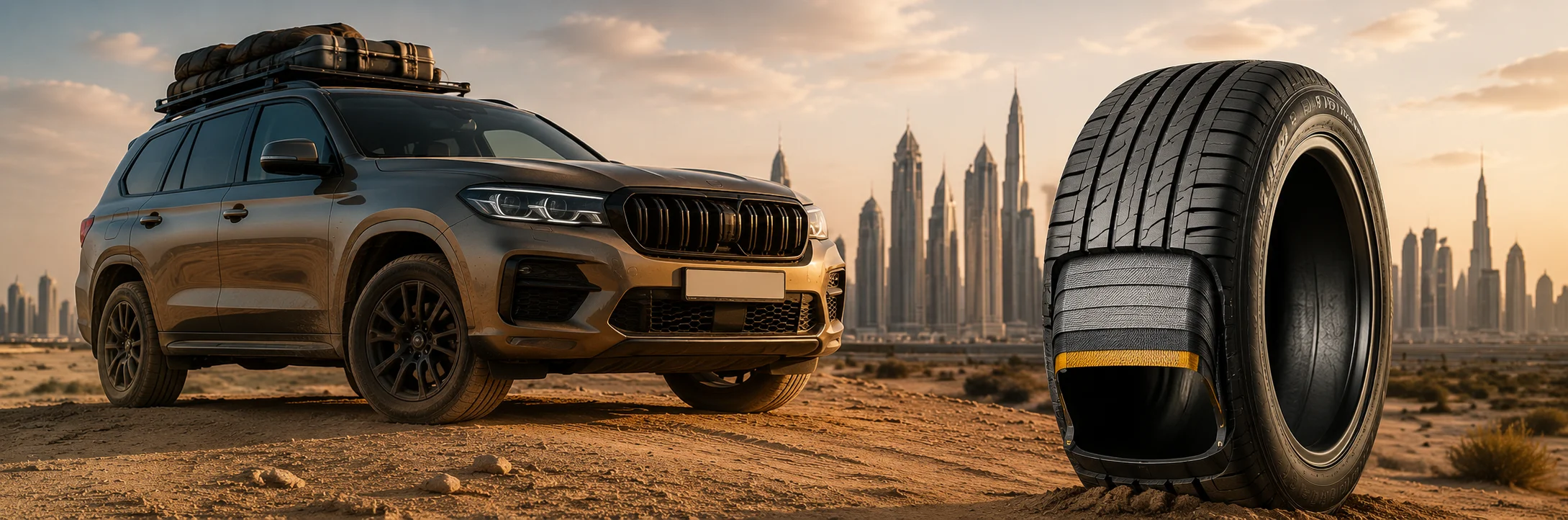
XL is an abbreviation for "Extra Load." These tyres have reinforced construction, which enables them to have a higher weight capacity than normal tyres of the same size.
Compared to ordinary tyres, XL tyres are run at increased inflation pressures and have increased load-carrying capacities with no increase in tyre size.
Key characteristics include the following:
Tyres that are used in SUVs demand more than smaller passenger automobiles. They need stronger tyre support due to their size, weight, and typical usage patterns.
XL tyres are created with the particular goal of addressing the loads imposed by bigger cars and adverse driving circumstances.
Many drivers are unsure whether their vehicle actually requires XL-rated tyres or if standard tyres are sufficient. The safest approach is to verify the manufacturer's recommendations before purchasing replacement tyres.
Most vehicles display tyre specifications on a sticker located inside the driver's door frame. This information typically includes the recommended tyre size, load index, and inflation pressure.
Vehicle manufacturers specify the minimum load rating required for safe operation. Replacement tyres should always meet or exceed these requirements.
The sidewall markings on the current tyres often indicate whether the vehicle is equipped with XL-rated tyres from the factory.
If there is uncertainty about load ratings, a professional tyre specialist can recommend the correct specification based on vehicle weight, usage, and manufacturer guidelines.
While both may share the same size, their load-carrying capabilities differ considerably.
This comparison highlights why XL-rated SUV Tyres are often preferred for larger vehicles.
Tyre selection errors can be attributed to the fact that drivers attend to the specifications that are visible.
The choice of appropriate tyres is not just about matching sizes.
Many modern SUVs are factory-equipped with XL-rated tyres because of their higher weight and load requirements.
Common examples include:
Tyre specifications vary by model year and trim level, so drivers should always verify manufacturer recommendations before replacement.
XL load indexes are very important in aiding the performance, safety and durability demands of the contemporary SUVs. Although most motorists are concerned with the tyre size or brand, the capability of a tyre to safely carry the weight of the vehicle is also significant. Driving conditions, such as high temperatures, highway speeds and family travel requirements in UAE are additional stressors to tyres, and therefore proper load ratings are necessary in this context to guarantee reliability over time.
Among drivers who want to find high-quality SUV Tyres, Tyres Online or a good tyres Deal, Tire.ae has a great variety of real tyres made by the most popular brands of SUVs, passenger cars, and performance cars. We assist UAE motorists to compare features, select the right load-rated tyres, and comfortably purchase tyres Online confidently to enjoy safe and reliable driving.
XL stands for Extra Load, meaning the tyre is designed to carry more weight than a standard tyre of the same size. XL tyres have reinforced construction and can safely support heavier SUVs, making them ideal for vehicles that frequently carry passengers, luggage, or tow trailers.
No, not every SUV requires XL tyres. The correct tyre specification depends on the vehicle manufacturer's recommendations. Always check your owner's manual or the tyre information sticker on the driver's door to confirm the required load index and tyre type.
Using standard tyres when your SUV requires XL-rated tyres can reduce load-carrying capacity, affect vehicle stability, increase tyre wear, and compromise safety. It is always best to install tyres that meet or exceed the manufacturer's recommended load index.
You can identify XL tyres by looking at the tyre sidewall. If the tyre is Extra Load, you'll typically see the marking "XL" or "Extra Load" printed alongside the tyre size and load index.
XL tyres are well-suited for UAE driving conditions because they provide higher load capacity, improved stability, and better durability in hot weather. They are especially beneficial for larger SUVs that regularly travel long distances, carry heavy loads, or drive on highways.