
Checkout using your account
Checkout as a new customer
Creating an account has many benefits:
Reviewed By
Tyre Specialist, Tire.ae
Mohammad Mahmoudi is the Operations Manager at Tire.ae, helping customers choose the right tyres for their vehicles. He ensures professional fitting services and a reliable experience across the UAE.
Electric and hybrid cars are gaining popularity due to their efficiency, reduced emissions, and technology. Although these vehicles offer numerous benefits over traditional petrol and diesel cars, they also pose special maintenance challenges that not all drivers are aware of. One of the most overlooked issues is brake pad corrosion.
Unlike regular cars, which mostly rely on friction braking, hybrid and electric vehicles operate in regenerative braking, which minimizes the work required on the brake pads and discs. Although this enhances efficiency and prolongs the life of brake components, it may also increase the likelihood of corrosion on braking components.
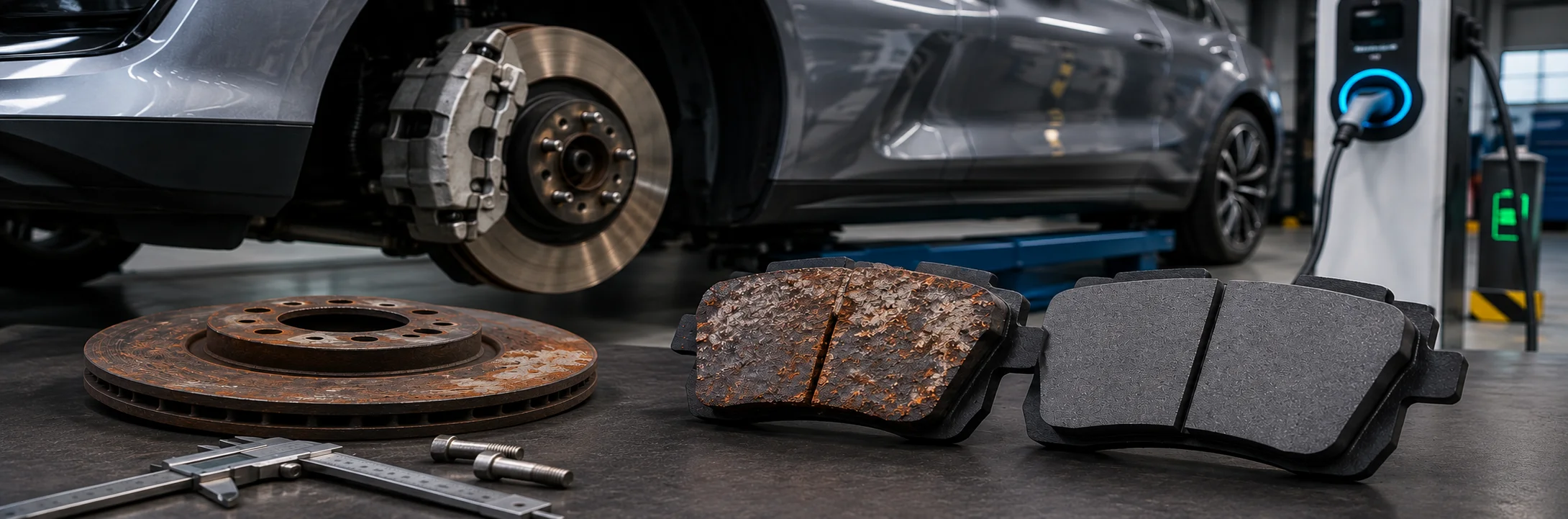
Corrosion of brake pads may impair braking efficiency, cause abnormal noises, accelerate component wear, and ultimately undermine driving safety. Knowing the causes and ways to prevent them helps owners save their cars and ensure stable braking performance in the long term.
Hybrid and electric car models combine regenerative braking with standard friction braking. Such an operating principle alters the frequency of active use of brake pads and discs.
Key braking system characteristics:
Although it is beneficial, reduced wear can create conditions in which corrosion forms more easily.
Corrosion of brake pads takes place due to the influence of moisture, dirt, road contaminants, and environmental conditions on the brake components over time. Corrosion may occur on brake discs, backing plates, calipers, and hardware around them.
Common signs include:
If left unaddressed, corrosion can affect overall braking efficiency and vehicle safety.
The rate of corrosion of brakes in hybrid and electric vehicles is frequently different to that of standard vehicles since the friction brakes are not used as often in these vehicles.
A number of environmental and operational factors contribute to brake corrosion in hybrid and electric cars.
Early detection of warning signs can help prevent more serious issues with braking systems.
Corrosion is not just a cosmetic issue. It can influence several aspects of vehicle operation and safety.
The best way to minimize corrosion-related problems is through preventive maintenance.
Regular Brake Pad Service plays a major role in preventing corrosion, maintaining braking efficiency, and ensuring safe vehicle operation. Professional brake inspections can identify early signs of rust, uneven wear, and component damage before they affect overall performance.
A professional Car Mechanical Service helps ensure that all brake-related components, including calipers, suspension parts, and brake hardware, function correctly and support safe braking performance.
Hybrid and electric vehicles depend heavily on advanced electrical systems that work alongside regenerative braking technology. Regular Car Electrical Service helps maintain these systems and ensures proper communication between braking components, sensors, and control modules.
Many corrosion-related problems worsen due to simple maintenance oversights.
Professional servicing provides several advantages beyond basic visual inspection.
The corrosion of brake pads is a widespread yet often neglected problem in hybrid and electric vehicles. Although regenerative braking helps wear down the brakes, it also means friction brakes are used less, which creates an environment where corrosion can easily form. Regular check-ups, preventive maintenance, and consistent brake use are among the factors that minimize the risk of corrosion and ensure consistent braking.
As a driver who requires professional services in Car Services, Brake Pad Service, Car Electrical Service, Car Mechanical Service, and Tire Service, Tire.ae is a company that offers automotive maintenance, brake inspections, tyre services, diagnostics, and car care solutions throughout the UAE. Our skilled team assists vehicle owners in ensuring safe, reliable, and efficient vehicle operation, as well as preventing unnecessary corrosion and wear on critical braking components.
Hybrid and electric vehicles use regenerative braking, so the friction brakes are applied less often. This allows moisture, dirt, and rust to build up on brake pads and discs over time.
Squeaking or grinding noises, visible rust, reduced braking smoothness, and uneven brake wear are common warning signs. Catching these early helps prevent bigger issues.
Common signs include squeaking or grinding noises, reduced braking performance, vibration while braking, and visible rust on brake components. Early inspection helps prevent further damage.
Yes. Corroded brake pads can reduce braking efficiency, increase stopping distance, and cause uneven braking. Regular maintenance helps keep your braking system safe and reliable.
It is recommended to have your brake system inspected during routine vehicle servicing or whenever you notice unusual brake noises or reduced performance. Regular checks help detect corrosion before it becomes a costly repair.