
Checkout using your account
Checkout as a new customer
Creating an account has many benefits:
Reviewed By
Tyre Specialist, Tire.ae
Mohammad Mahmoudi is the Operations Manager at Tire.ae, helping customers choose the right tyres for their vehicles. He ensures professional fitting services and a reliable experience across the UAE.
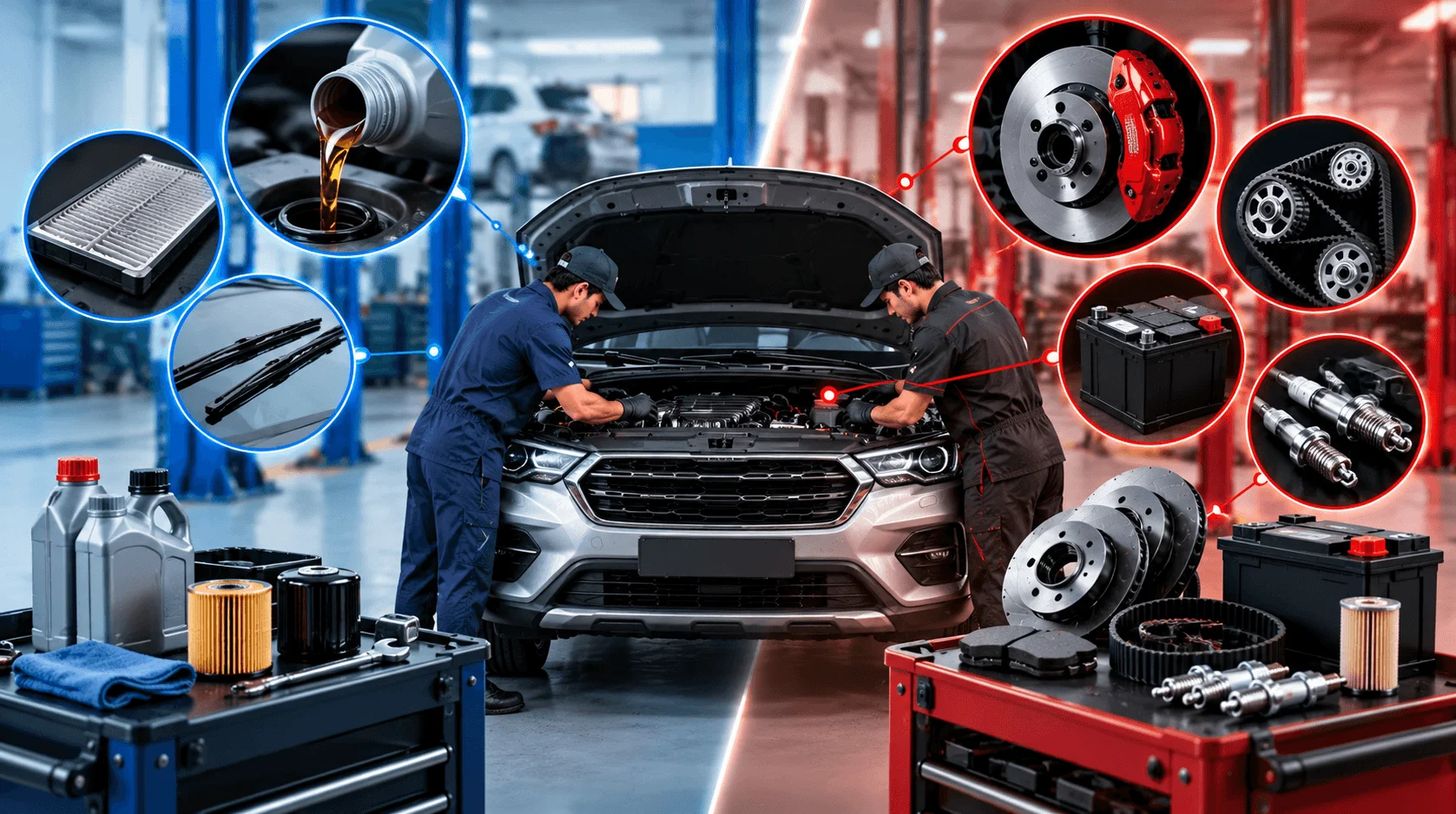
A professional car service is something far more than changing the engine oil or changing a couple of filters. Experienced mechanics follow a systematic inspection procedure that tests the engine, braking system, suspension, steering, tires, battery, cooling system, and onboard electronics, and then recommend repairs. If you drive your vehicle every day in Dubai, Abu Dhabi, Sharjah, or elsewhere in the UAE, our suggestion is based on a professional inspection checklist that helps avoid unexpected failures, enhance reliability, and minimize long-term repair costs.
The current cars require both specialized diagnostic tools and technical knowledge to use since the automotive industry has integrated both electronic and mechanical inner parts of the car. Minor problems like poor battery performance, imbalanced tire wear, coolant issues, or suspension wear normally progress without any tangible modifications.
These faults are detected by professional technicians during the initial stage of a car mechanical service, and repairs can be carried out before it becomes an expensive failure or roadside emergency.
A professional car service follows a systematic inspection rather than replacing parts based on assumptions. Qualified technicians inspect every major vehicle system to evaluate its condition, identify developing faults, and recommend maintenance according to manufacturer specifications. Before understanding the inspection process, two technical terms are useful.
Preventive maintenance is the routine maintenance of vehicle parts before failure. Changing the deteriorated fluids, filters, belts, or brake parts at scheduled time intervals lowers unexpected breakdowns and expensive repairs.
A multi-point check-up is the overall review and assessment of the engine, brakes, its suspension, steering, tyres, battery, electrical, cooling, fluids, and safety equipment, prior to any form of recommendation on any repair.
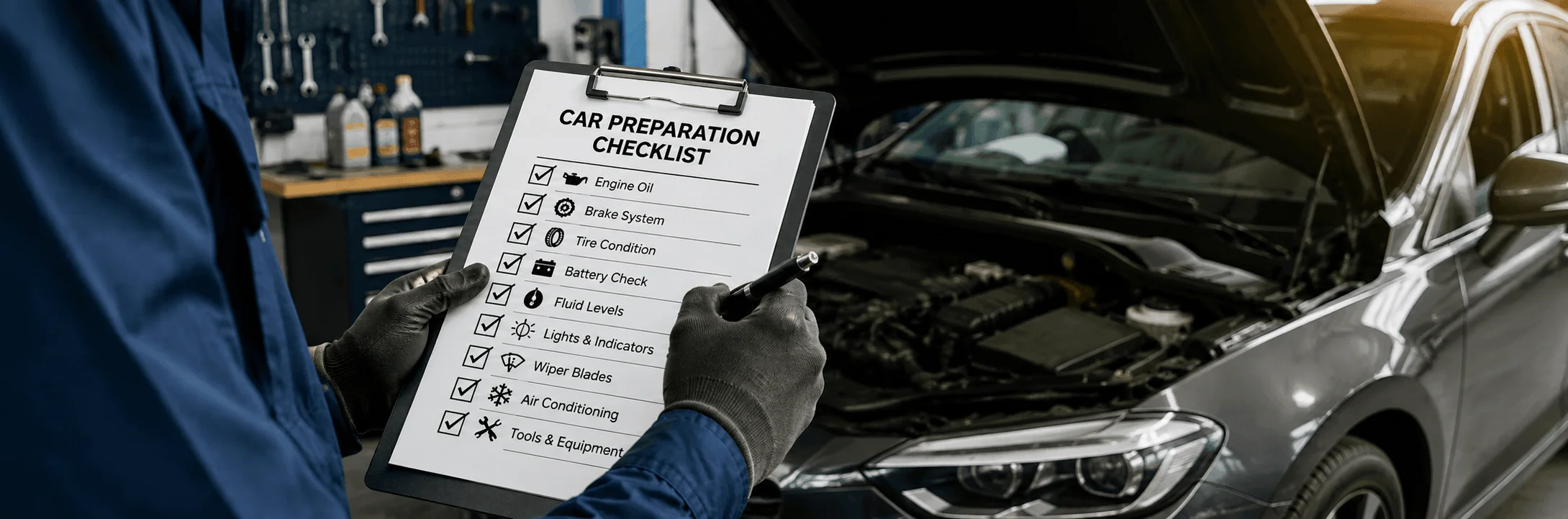
While the exact procedure varies slightly between manufacturers, the checklist below represents the standard inspection process followed by most professional workshops and auto repair shops Dubai, Abu Dhabi, Sharjah, and the UAE.
Diagnostic scanning is particularly useful when a warning light, drivability complaint, electrical problem, or stored electronic fault is suspected. A scan tool communicates with available vehicle control modules and gives technicians information that can guide further physical testing.
Starting problems are not always caused by the battery itself. A weak battery, poor terminal connection, alternator fault, excessive resistance, or abnormal parasitic draw can produce similar symptoms. Technicians therefore evaluate the starting and charging system before recommending component replacement.
Lubrication, cooling, and braking are key vehicle fluids. Mechanics detect wear or mechanical problems at an early stage of development through checking their status and levels.
Car tyre and suspension checks are done as a system since when tyre wear is uneven, it may not necessarily suggest tyre puncturing but a possible wheel misalignment or other suspension issues.
The underbody is a portion of the car that carries essential components that cannot be viewed during an ordinary check-up. Mechanics hoist the car to detect deficiencies in its underbody before they become costly to repair.
The importance of air conditioning performance is especially great in the UAE. Mechanics check the mechanism to make sure that it can cool in hot summer.
The last quality check of a vehicle before handing it back involves professional mechanics to ensure that all serviced parts are functioning properly. This is the final measure that ensures all repairs have been done, the initial concern is not recurring, and there are no other concerns before the vehicle is taken out of the workshop.
A qualified Car Mechanical Service is much more elaborate than a routine oil change. Experienced technicians check the engine, brakes, battery, tyres, suspension, steering, cooling system, air conditioning, and onboard electronics. This helps detect developing faults early enough before they turn into costly repair jobs. The benefits of regular servicing include increased safety, reliability, increased component life, and continued efficient performance by your vehicle under the challenging driving environment of Dubai, Abu Dhabi, Sharjah, and the entire UAE.
You can find a reliable car service or vehicle repair shop at Tire.ae that offers reliable treatment for your vehicle, auto diagnostics, brake repair, suspension repair, battery change,wheel alignment, tire repairs, and full vehicle repair. With expertly trained technicians and advanced diagnostic equipment, Tire.ae will assist drivers throughout the UAE to ensure their cars are safe, reliable, and on the road year-round.
Follow your vehicle manufacturer’s recommended service interval, although vehicles driven regularly in UAE conditions often benefit from more frequent inspections.
Most modern workshops perform diagnostic scanning to identify electronic faults before beginning mechanical repairs.
Suspension wear affects steering, tyre wear, braking stability, and overall driving safety even when no obvious symptoms are present.
Yes. Early detection of worn components, fluid leaks, or electrical faults often prevents major mechanical failures and reduces repair costs.
Yes. Many developing mechanical and electrical problems do not trigger dashboard warning lights until the condition becomes more serious.